Charlie Watts Played One Note on Honky Tonk Women. Drummers Have Been Chasing It Ever Since.
At 0:00 on Honky Tonk Women, Charlie Watts struck a single cowbell hit that set the entire feel of the record before a single vocal landed. Fifty years of drummers have tried to replicate that entrance. Nobody's nailed it.
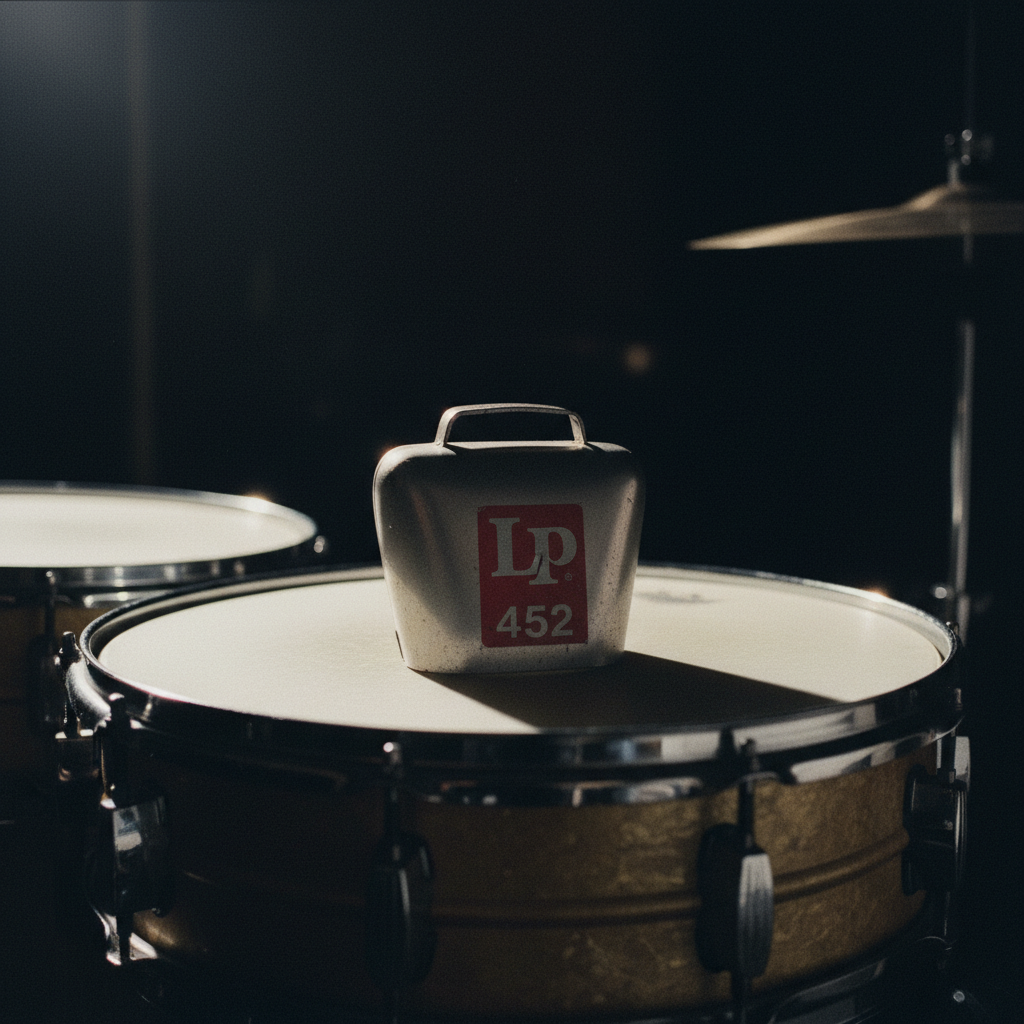
One hit. Zero setup. No recovery needed.
The cowbell lands at 0:00. Not 0:01. Not after a count-in or a floor tom roll to signal where the pocket is. Zero. Watts opens the track with a single strike on what session documentation identifies as a Ludwig cowbell (standard bell, no modifications), and then the snare comes in, and then Keith Richards' open-G riff, and by the time Mick Jagger opens his mouth four bars later, the entire emotional register of the song is already locked.
One cowbell hit did that.
The entrance is a quarter-note placement. Isolated. No flam, no doubling, no wash of hi-hat underneath to cushion it. Watts hit the bell on beat one and let the transient do the work. A Ludwig bell from that period (mid-1969, recorded at Olympic Sound Studios in London) peaks in the 2.8–3.5kHz range, a frequency band that cuts through a full rock arrangement without blending into it. It doesn't cushion. It announces.
Watts knew this. Everything he did was deliberate.
The physics of an entrance
A cowbell hit is not a sustained tone. Decay is fast, typically under 200 milliseconds at the fundamental frequency before the higher partials dominate and the ring drops into the track's noise floor. What's left after the initial transient is a metallic shimmer, more felt in the mix than consciously heard.
That's the physics. In practice: a cowbell hit at the top of a track, before any other instrument, arrives in full isolation. The listener's ear hasn't been primed by a kick drum or a guitar chord, so the transient registers with full perceptual weight. Watts knew (or intuited, which for him was the same thing) that placing the cowbell at 0:00 created an entrance with no precedent in the arrangement and no safety net if it felt off.
It didn't feel off. Not once in over fifty years of listening.
What Watts actually did (and didn't do)
Here's the uncomfortable part for anyone who's tried to cover this song: Watts wasn't swinging the cowbell. He wasn't burying it in the groove. The hit is dry, centered in the stereo field, and executed with the same economic authority he applied to everything.
Watts was a jazz drummer playing rock. That framing matters for understanding why his cowbell placement works differently than a session player loading up the instrument across a full bar. Jazz phrasing values negative space. The rests. The decision not to play is as considered as the decision to play.
One note. Because one note was correct.
The cowbell reappears later in the track (Watts uses it in the groove through the verses), but the single hit at 0:00 is structurally different. It functions as a declaration, not a timekeeping device. The difference between those two roles is the entire ballgame, and most drummers who've covered Honky Tonk Women either oversell the entrance or underplay it into ambiguity.
The session context
The Stones tracked Honky Tonk Women on March 16, 1969, at Olympic Sound Studios with Jimmy Miller producing and Glyn Johns engineering. Miller had co-written Country Honk with Richards, a slower country-inflected version with a fiddle that would appear on Let It Bleed. The electric Honky Tonk Women was cut separately, different arrangement, different emotional temperature.
Jimmy Miller played cowbell on some Stones sessions (he's documented on Gimme Shelter and Sympathy for the Devil), and his style was busier, more propulsive. The 0:00 hit has Watts' restraint on it. Session and production accounts credit it to him, and the feel confirms it.
Johns mixed the track with the cowbell present but not forward. It sits mid-field, slightly recessed from the snare, so the transient leads but the ring doesn't stack against the vocal. Smart placement. The cowbell never competes with Jagger. It occupies frequency space the vocal doesn't need and gets out of the way when the song starts breathing.
Why nobody's matched it
The cover problem isn't technical. Any competent drummer can hit a cowbell on beat one and approximate the physical event.
Feel is the problem. Feel isn't mystical, but it has components. Watts' internal clock was famously behind the beat in a way that contradicted conventional rock timing. Where most rock drummers push slightly or sit on top, Watts placed his notes just back, a micro-timing choice that gave the Stones the sense of always being about to fall apart without ever doing so. That controlled drag is baked into the cowbell hit at 0:00 even though it's a single isolated note with no rhythmic context yet established.
You hear the behind-the-beat phrasing because of what comes after. The ear retroactively reads the cowbell entrance through the groove that follows. The hit gets colored by the feel of the whole performance.
Nobody can copy that without copying the entire performance that follows. And nobody has.
Registry note
Track: Honky Tonk Women — The Rolling Stones Recorded: March 16, 1969, Olympic Sound Studios, London Produced by: Jimmy Miller Engineered by: Glyn Johns Released: July 4, 1969
Cowbell entrance: 0:00 Pattern: Single hit, beat one, isolated Mix position: Mid-field, recessed from snare Instrument: Ludwig cowbell (standard bell, c. 1969) Frequency profile: Transient peak 2.8–3.5kHz, fast decay Attributed to: Charlie Watts
The SNL sketch exists because Will Ferrell and Christopher Walken identified something real: this cowbell hit has cultural gravity. That sketch ran in 2000, thirty-one years after Watts played the note, and it still works because the original record still works.
The instrument earned the joke. Give it that.